
Last Updated on August 31, 2026 by Rocky
When a sales hire doesn’t work out, most leaders assume the candidate “fooled” them – a great interview, a persuasive resume, a story that fell apart once the job got real. After decades in sales hiring, we can tell you the truth is less comfortable: it usually isn’t the candidate who did the fooling. The blind spot is the hiring team, and they fooled themselves by skipping the one step that makes every decision after it possible – defining the role with precision before a single resume ever hits the desk.
Why Identification Has to Come First
Most hiring processes start in the wrong place: resumes and interviews. Before you can consistently hire salespeople who hit their numbers, elevate your culture, and stay, you need clear, written answers to three questions.
- The outcomes this salesperson must own – in the first 90 days, at six months, and at one year.
- The selling sales competencies that actually drive those outcomes, not generic traits pulled from a template.
- The non-negotiable strengths that must show up on day one, because they cannot realistically be coached into existence.
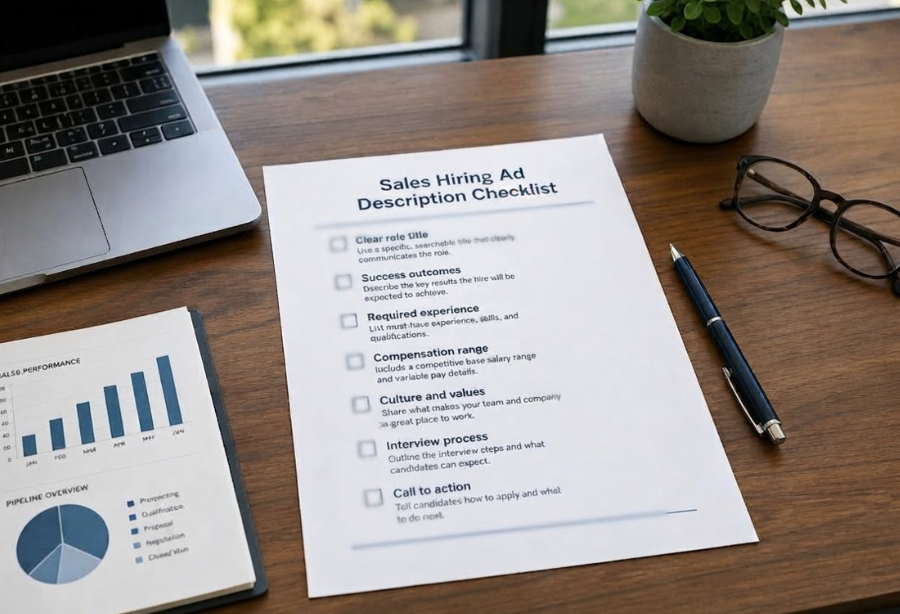
Skip this step and everything downstream – screening, interviewing, compensation, onboarding – gets built on guesswork. You end up measuring every candidate against a fuzzy, shifting picture of “what we need,” which is precisely how average performers slip through the net and how the strongest candidates get passed over for the person who simply interviewed well.
Why Most Job Postings Repel the Talent You Actually Want
Once the role is identified with that level of precision, the next place great candidates are lost is attraction. Most job postings are written by committee, for HR compliance, and for search engines, not to speak directly to the sales performers capable of transforming a team. That matters more than most leaders realize: only a fraction of the salespeople in any market can both sell and will sell at a high level, and a posting written like a legal disclaimer will never reach them.
High-caliber sales talent responds to specificity. A posting that makes a strong performer think, “this is me, I need to talk to them,” is doing two jobs simultaneously: it describes exactly what winning looks like in the role, and it signals the leadership, coaching, and culture that top performers are actively seeking in their next move.
When attraction isn’t deliberate, hiring leaders end up doing the opposite of what they intended, screening average, interviewing average, hiring average, and eventually firing average, on a costly repeat cycle. The fix is not more sourcing volume. It’s precision at the very top of the funnel.
The Real Cost of Skipping These Two Steps
Nearly every sales leader has a story about a hire who looked perfect on paper and unraveled within a quarter. The postmortem almost always reveals the same root cause: the role was never fully identified, and the posting never spoke to the people capable of filling it. Fixing this does not require a bigger budget or a longer interview process. It requires a disciplined framework applied before you write a single job description and it is the single highest-leverage step in the entire hiring chain.
If your last few sales hires haven’t stuck – or you’re preparing to hire again this quarter – then fixing the blind spot starts well before the first interview.
www.linkedin.com/in/salesdevelopmentexpert , https://www.youtube.com/@rmldeadwood1 , https://x.com/SalesDevelopme3 , https://www.salesdevelopmentexpert.com/blogs/

Rocky is the founder and CEO of Sales Development Expert, bringing over 35 years of hands-on experience in building championship sales teams for more than 2,800 businesses worldwide. As a recognized leader in sales hiring, training, and team development, Rocky is known for his results-driven strategies, deep expertise in sales-specific assessments, and passion for helping companies achieve breakthrough growth.