
Last Updated on September 28, 2026 by Rocky
If AI is interviewing your next sales hire, who is actually making the hiring decision?
I recently watched a TikTok of an AI conducting a job interview. (Credits and a thank you to @jackbgreenberg )
It was an impressively perfect representation of what AI will not (or better yet) should not take over. It was a perfect example of why CEOs and Presidents need to be careful about turning too much of the hiring process over to technology.
Yes, the candidate was interviewing for an analyst position, not sales, but stay with me here. The AI interviewer explained that its job was to determine whether he was the right fit for the role and whether the role was right for him.
Sounds reasonable.
Then things started to go sideways.
The candidate said he was nervous and asked what question he should answer first. Instead of simply asking the first interview question, the AI became confused by his behavior.
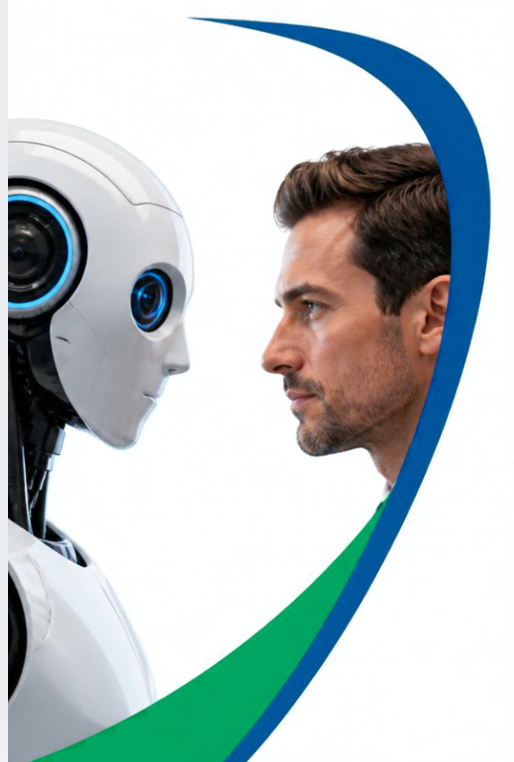
It eventually characterized him as “combative.”
Then it determined that he was trying to get the interview questions in advance so he could “cheat.”
And then it rejected him.
Here is the BIG problem?
It never actually interviewed him.
The candidate hadn’t demonstrated that he couldn’t do the job.
He hadn’t demonstrated that he was dishonest.
Hadn’t demonstrated that he was combative.
He was nervous, confused about the interview process, and trying to figure out what the AI interviewer wanted from him.
The AI interpreted his behavior.
It didn’t understand it.
And that distinction matters enormously when you’re hiring salespeople.
AI Doesn’t Know What It Doesn’t Know
Let’s be clear: AI can be incredibly useful in hiring. (join us on October 14th and we will show you how, register here; AI & Sales Hiring Best Practices)
But there is a significant difference between collecting information and understanding a person.
A human interviewer can hear a candidate say: “I’m nervous. What should I answer?”
And think: “He’s nervous.” Or: “He’s inexperienced with interviews.” Or: “He’s trying to understand what we’re looking for.“
The AI in this TikTok essentially jumped from behavior to conclusion. That’s dangerous.
Because sales hiring isn’t about identifying the person who gives the most technically acceptable answers. It’s about understanding whether the person can actually succeed in the role – in your market, under your leadership, in your sales cycle etc etc.
Now Put That AI Interviewer in Front of a Sales Candidate
This is where the issue gets even more interesting.
Salespeople are supposed to communicate.
- They are supposed to ask questions.
- They’re supposed to challenge assumptions.
- They’re supposed to think on their feet.
- They’re supposed to adapt.
- They’re supposed to influence.
- They’re supposed to handle ambiguity.
- They’re supposed to read another person.
So what happens when the person interviewing them can’t do the same thing?
Imagine a sales candidate says: “Before we get started, can you tell me what you’re looking for in this position?”
Is that a problem? Maybe.
Or maybe the candidate is demonstrating curiosity.
Maybe they’re trying to understand the buyer – something good salespeople do. Or maybe they’re trying to establish the agenda. Maybe they’re nervous or maybe they’re inexperienced. Maybe they’re simply trying to understand the process.
Context matters.
A human interviewer can explore that. An automated system may simply categorize the behavior. And that’s where CEOs and Presidents need to pay attention.
The Difference Between an AI Interview and a Human Interview
The question isn’t: “Is AI good or bad for sales hiring?”
That’s too simplistic. The better question is: “What should AI be responsible for and what should remain human?”
AI is excellent at processing information. People are better equipped to explore meaning.
AI can ask: “Tell me about your sales experience.”
A human can hear the answer and ask: “You said you consistently exceeded quota. Tell me about the last time you were behind and what you personally did to turn it around.”
Then the candidate answers. And the human can ask another question based on what they just heard.
That’s where a real interview becomes an audition, rather than a questionnaire.
And sales hiring requires an interview than auditions its sales candidates.
Because Your Best Salespeople May Not Interview Like Your Best Interviewees
This is one of the biggest mistakes companies make when hiring salespeople.
They hire the person who interviews well instead of determining whether the person will actually sell well. Can vs WILL.
Those aren’t necessarily the same person. Someone can be polished, articulate, confident and impressive in an interview. That doesn’t automatically mean they will prospect.
- It doesn’t mean they’ll handle rejection.
- It doesn’t mean they’ll create urgency.
- It doesn’t mean they’ll hold themselves accountable.
- It doesn’t mean they’ll follow your sales process.
- And it certainly doesn’t mean they WILL sell for your organization.
That’s the real question.
Don’t Let Technology Create False Confidence
The danger isn’t necessarily AI itself. The danger is believing that because a hiring process is automated, it must therefore be objective.
It isn’t.
AI is still interpreting information based on the way it has been designed and the data it has been given. And if the process is flawed, AI can simply help you execute that flawed process faster.
That’s not progress. That’s efficiency applied to the wrong problem.
Before Your Next Sales Hire, Ask Yourself:
- Are we evaluating sales ability or interview ability?
- Are we looking for evidence of how someone will perform or simply how well they answer questions?
- Are we giving candidates an opportunity to demonstrate how they think, sell, communicate and respond under pressure?
- Are we using AI to improve our hiring process or allowing AI to become the hiring process?
There is a big difference.
AI Should Help You Hire. It Shouldn’t Replace the Judgment Required to Hire.
The future of sales hiring isn’t necessarily AI versus humans.
It should be AI + Human.
Use AI where it makes the process faster, more consistent and more efficient.
But don’t forget what you’re actually trying to accomplish. You’re not hiring a resume. You’re not hiring interview answers. And you’re not hiring an algorithm’s interpretation of a candidate.
You’re hiring a person who is going to represent your company, sell your product, work with your customers and ultimately impact your revenue.
That’s too important to outsource entirely to a machine. The goal isn’t to find the candidate who can interview AND to find the candidate who WILL sell.
And that’s where the human element of sales hiring still matters.
www.linkedin.com/in/salesdevelopmentexpert , https://www.youtube.com/@rmldeadwood1 , https://x.com/SalesDevelopme3 , https://www.salesdevelopmentexpert.com/blogs/

Rocky is the founder and CEO of Sales Development Expert, bringing over 35 years of hands-on experience in building championship sales teams for more than 2,800 businesses worldwide. As a recognized leader in sales hiring, training, and team development, Rocky is known for his results-driven strategies, deep expertise in sales-specific assessments, and passion for helping companies achieve breakthrough growth.